
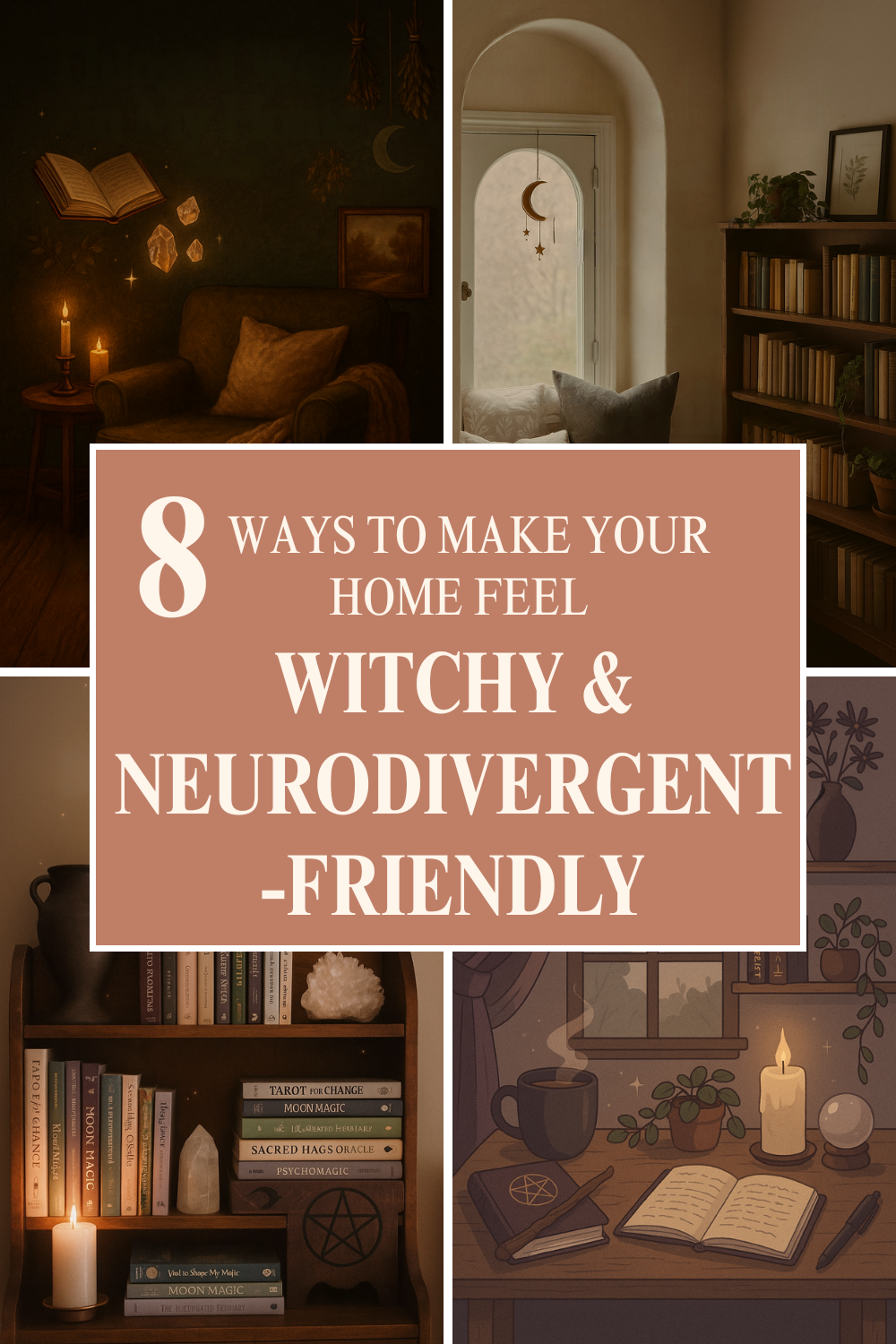
Transform your space into a calming sanctuary that supports both your neurodivergent needs and spiritual practice with these ADHD and autism-friendly home design tips.
For many neurodivergent witches, home isn’t just where we live it’s where we ground, recharge and reconnect with our inner magic. Whether you have ADHD, autism or other neurodivergent traits, creating a space that honors both your sensory needs and spiritual practice can be transformative.
Research shows that environmental factors significantly impact neurodivergent wellbeing, with sensory-friendly spaces reducing anxiety and improving focus. When we combine this with the grounding power of spiritual practices, we create truly magical sanctuaries.
In this comprehensive guide, I’ll share 8 evidence-based ways to design a witchy home that supports your neurodivergent brain while nurturing your spiritual growth.
Table of Contents
- Transform Your Bedroom into an Energy Sanctuary
- Choose Calming, Adjustable Lighting
- Build Your Sacred Library
- Create Low-Stimulation Ritual Corners
- Design Accessible Spiritual Practices
- Curate a Sensory-Safe Reading Sanctuary
- Set Up Your Sacred Workspace
- Bring Grounding Nature Elements Inside
Understanding Neurodivergent Home Needs
Before diving into specific tips, it’s important to understand what makes a space truly neurodivergent-friendly:
Sensory Considerations:
- Adjustable lighting to prevent overwhelm
- Soft textures and comfortable seating
- Minimal visual clutter
- Natural scents or fragrance-free options
- Quiet zones for decompression
Executive Function Support:
- Easy-to-maintain organization systems
- Visual reminders and cues
- Accessible storage for daily-use items
- Clear pathways and defined spaces
Emotional Regulation:
- Predictable, organized environments
- Calming color palettes
- Personal comfort items
- Spaces for stimming or movement
🧘♀️ 1. Choose Lighting That Soothes & Enchants
Why This Matters for Neurodivergent Brains: Harsh fluorescent lighting can trigger sensory overload, increase anxiety and disrupt circadian rhythms especially challenging for neurodivergent individuals. Studies show that warm, dimmable lighting can reduce stress hormones by up to 30%.
Neurodivergent-Friendly Lighting Solutions:
Layered Ambient Options:
- Fairy lights: Provide gentle, twinkling illumination without harsh shadows
- Himalayan salt lamps: Emit warm orange light that promotes relaxation
- LED candles: Safe for those with memory or attention challenges
- Color-changing bulbs: Allow customization based on energy levels and time of day
ADHD-Specific Tips:
- Use smart bulbs that can be controlled via phone apps
- Set lighting schedules to support routine-building
- Choose bulbs with “focus” settings (cooler light) for work areas
Autism-Specific Considerations:
- Use blackout curtains to control natural light levels
- Avoid flickering or buzzing lights that can cause distress
- Provide multiple lighting options for different sensory needs

📚 2. Build a Shelf of Soul Books
The Neurodivergent Witch’s Library: Creating a curated collection of books serves multiple purposes: it reduces decision fatigue when choosing what to read, provides visual organization and creates a sense of accomplishment and identity.
Essential Categories for Your Witchy Neurodivergent Library:
Spiritual Growth & Practice:
- Astrology and moon magic guides
- Herbalism and natural healing
- Tarot and oracle deck guidebooks
- Meditation and mindfulness practices
Neurodivergent Resources:
- ADHD and autism self-help books
- Sensory processing guides
- Executive function strategies
- Neurodivergent-affirming content
Comfort & Inspiration:
- Poetry collections
- Mythology and folklore
- Nature writing
- Personal development
Organization Tips for Neurodivergent Minds:
Visual Organization:
- Use consistent book spine colors or covers
- Organize by frequency of use rather than alphabetically
- Place most-referenced books at eye level
Executive Function Support:
- Create a simple check-out system for loaned books
- Keep a “currently reading” basket for easy access
- Use bookmarks with built-in LED lights for evening reading
Recommended Products:
📎 “Psychomagic” by Alejandro Jodorowsky
📎 Sacred Hags Oracle Deck
📌 For more details, check out 3 books every witchy soul should read →
- The Green Witch: Your Complete Guide to the Natural Magic of Herbs, Flowers, Essential Oils and More
- Witchery: Embrace the Witch Within
- The House Witch: Your Complete Guide to Creating a Magical Space with Rituals and Spells for Hearth and Home
🌙 3. Create a Corner for Candlelight
Why Low-Stimulation Zones Are Essential: Neurodivergent individuals often experience sensory overload throughout the day. Having a designated low-stimulation zone provides a reliable space for nervous system regulation.
Designing Your Calm Corner:
Sensory-Safe Candle Options:
- Unscented beeswax candles: Natural and non-triggering
- LED flameless candles: Safe for those with attention challenges or memory issues
- Real-wax battery candles: Provide authentic look without fire hazards
Creating the Perfect Low-Stim Environment:
- Use soft, neutral colors (beiges, grays, muted earth tones)
- Add weighted blankets for proprioceptive input
- Include soft textures like velvet pillows or faux fur throws
- Keep the area clutter-free and visually calm
ADHD Considerations:
- Choose flameless options if you tend to forget about lit candles
- Use timers to automatically turn off LED candles
- Keep matches or lighters in a designated, easily remembered spot
Autism-Friendly Features:
- Ensure consistent lighting that doesn’t flicker
- Avoid strong scents that might cause sensory issues
- Create clear boundaries for the space with rugs or furniture placement
Recommended Products:
📎 Set of real-wax flameless candles
📎 Minimalist candle holders

🪞 4. Make Rituals Easy & Accessible
Simplifying Spiritual Practice for Neurodivergent Minds: Complex altar setups can become overwhelming and create barriers to consistent practice. The key is making your spiritual tools as accessible as your daily essentials.
The Ritual Drawer/Shelf System:
Essential Items for Easy Access:
- Moon journal and comfortable pen
- Cleansing spray (sage, palo santo or sound cleansing alternatives)
- Favorite tea or ritual beverage
- One go-to oracle or tarot deck
- Small crystals for pocket carrying
- Affirmation cards or written intentions
Organization Strategies:
For ADHD:
- Use clear containers to see contents at a glance
- Label everything clearly
- Keep items in the same place every time
- Use visual reminders (sticky notes, phone alarms)
For Autism:
- Create a consistent ritual order
- Use the same tools each time to reduce decision fatigue
- Write out simple ritual steps
- Keep backup items in case originals are misplaced
Micro-Rituals for Busy Days:
- 2-minute morning intention: Light a candle and speak one intention
- Transit magic: Carry a small crystal and set intentions during commutes
- Bedtime release: Write one thing you’re letting go of before sleep
- Meal blessing: Take three deep breaths before eating
Recommended Ritual Kits:
📌 Explore my guide to witchy travel & Sabbats→
🪑 5. Curate a Neurodivergent-Friendly Reading Nook
The Science of Sensory-Safe Spaces: Research from the Journal of Autism and Developmental Disorders shows that controlled sensory environments can reduce anxiety by up to 40% in neurodivergent individuals. Your reading nook should be your nervous system’s safe haven.
Essential Elements for Sensory Regulation:
Proprioceptive Input:
- Weighted blankets: Provide deep pressure that calms the nervous system
- Body pillows: Offer full-body support and comfort
- Compression seating: Bean bags or tight-fitting chairs
Visual Calm:
- Neutral color palette: Soft grays, warm whites, muted earth tones
- Minimal visual clutter: Keep decorations simple and purposeful
- Natural textures: Wood, cotton, linen, wool
Sound Management:
- Soft furnishings: Absorb excess noise
- White noise options: Fans, sound machines or apps
- Noise-canceling headphones: For times when you need complete quiet
Plants for Grounding:
Certain plants can improve air quality and provide gentle sensory input:
- Snake plants: Low maintenance, air purifying
- Pothos: Trailing vines provide visual interest without overwhelm
- ZZ plants: Nearly indestructible and thrive in low light
- Peace lilies: Beautiful white flowers, indicate watering needs
ADHD-Friendly Features:
- Fidget basket: Keep stress balls, fidget cubes or textured items nearby
- Timer system: Use visual timers to track reading sessions
- Book rotation: Keep 3-5 books accessible to match different moods
Autism-Friendly Considerations:
- Consistent setup: Keep the space arranged the same way
- Texture variety: Offer different fabric options for different sensory needs
- Predictable lighting: Avoid spaces near windows with changing light
Recommended Products:

☕ 6. Design a Desk for Dreamy Rituals
Creating Sacred Workspace for Neurodivergent Minds: Your desk can become a daily touchpoint for spiritual practice while supporting focus and executive function. The key is balancing inspiration with functionality.
Desk Setup for Success:
Executive Function Support:
- Clear surfaces: Keep only daily-use items visible
- Organized drawers: Use dividers for small items
- Visual schedules: Display daily routines or goals
- Accessible supplies: Keep pens, journals, crystals within arm’s reach
Sensory-Friendly Elements:
- Comfortable lighting: Desk lamp with adjustable brightness
- Textured items: Smooth stones, worry stones or fidget tools
- Plant life: Small succulents or air plants for visual calm
- Aromatherapy: Essential oil diffuser or scented candles (if tolerated)
Daily Ritual Integration:
Morning Intention Setting:
- Keep a dedicated intention journal
- Place an inspiring crystal or stone nearby
- Write three daily priorities or affirmations
Afternoon Reset:
- Use a cleansing spray between tasks
- Take three deep breaths with eyes closed
- Shuffle oracle cards for midday guidance
Evening Reflection:
- Journal about the day’s experiences
- Light a candle while reviewing accomplishments
- Set intentions for tomorrow
ADHD-Specific Organization:
- Color coding: Use different colors for different types of tasks
- Deadline tracking: Visual calendar or whiteboard
- Reward system: Small treats or crystals for completed tasks
- Minimal distractions: Face away from high-traffic areas
Autism-Friendly Features:
- Consistent layout: Keep items in the same place daily
- Routine support: Written or visual schedules
- Sensory tools: Stress balls, fidget spinners or textured items
- Noise management: Noise-canceling headphones readily available
Recommended Desk Essentials:

🌿 7. Bring Nature Inside
The Neurodivergent Brain and Nature: Studies show that exposure to natural elements can improve focus in ADHD individuals by up to 20% and reduce anxiety in autistic individuals. Bringing nature indoors creates grounding energy while supporting cognitive function.
Sensory-Smart Plant Selection:
Low-Maintenance Options for ADHD:
- Snake plants: Thrive on neglect, air purifying
- ZZ plants: Tolerate irregular watering
- Pothos: Grow in water or soil, very forgiving
- Spider plants: Produce babies, showing clear growth progress
Autism-Friendly Choices:
- Predictable plants: Those with consistent watering needs
- Non-toxic options: Safe if accidentally touched or tasted
- Minimal scent: Avoid heavily fragrant plants
- Structured growth: Plants with clear patterns or shapes
Natural Elements Beyond Plants:
Dried Botanicals:
- Eucalyptus bundles: Provide gentle aromatherapy
- Dried lavender: Calming scent and texture
- Wheat grass or pampas: Add texture without maintenance
- Pine cones and branches: Seasonal natural elements
Crystals and Stones:
- River rocks: Smooth textures for fidgeting
- Geodes: Beautiful to look at, provide visual interest
- Crystal clusters: Create focal points without overwhelm
- Tumbled stones: Perfect for pocket carrying
Indoor Herb Gardens:
Growing culinary or magical herbs provides:
- Sensory stimulation: Different textures and scents
- Executive function practice: Daily care routines
- Magical ingredients: Fresh herbs for cooking or spells
- Accomplishment feelings: Visible growth and success
Easy Herbs to Start With:
- Basil: Fast-growing, useful in cooking
- Mint: Hardy, spreading (contain in pots)
- Rosemary: Woody texture, magical associations
- Sage: Sacred plant, beautiful silvery leaves
Recommended Natural Elements:
📎 Indoor hanging herb garden kit
📎 Witch aesthetic dried bouquet
🛏️ 8. Make Your Bedroom an Energy Sanctuary
Sleep and Neurodivergent Brains: Sleep challenges affect up to 80% of individuals with ADHD and up to 90% of autistic individuals. Creating a bedroom sanctuary that supports both rest and spiritual practice is essential for overall wellbeing.
Essential Elements for Restorative Sleep:
Light Management:
- Blackout curtains: Block outside light for better melatonin production
- Amber lighting: Use warm-toned bulbs in evening hours
- No screens rule: Keep phones, tablets and TVs out of the bedroom
- Himalayan salt lamps: Provide gentle nighttime illumination
Sensory Optimization:
- Weighted blankets: Provide deep pressure for nervous system calm
- Breathable fabrics: Cotton, linen or bamboo for temperature regulation
- White noise: Consistent sound to mask environmental disruptions
- Comfortable mattress: Proper support for restful sleep
Spiritual Integration:
Bedtime Rituals:
- Gratitude practice: Write three things you’re grateful for
- Intention setting: Choose tomorrow’s focus before sleep
- Crystal placement: Keep calming stones like amethyst nearby
- Cleansing spray: Clear the day’s energy from your space
Morning Sacred Moments:
- Gentle awakening: Use sunrise alarm clocks or soft music
- Stretching or yoga: Simple movements to connect with your body
- Card pull: Draw daily guidance from an oracle deck
- Affirmation practice: Speak positive intentions for the day
ADHD Sleep Support:
- Consistent bedtime routine: Same activities in same order nightly
- Visual reminders: Bedtime checklist visible in bathroom
- Medication timing: Work with healthcare providers on timing
- Environment control: Keep bedroom cool, dark and quiet
Autism Sleep Considerations:
- Predictable routine: Same bedtime and wake time daily
- Sensory comfort: Familiar textures, sounds and smells
- Temperature regulation: Consistent comfortable temperature
- Safety items: Comfort objects or weighted items as needed
Bedroom Sanctuary Essentials:

Frequently Asked Questions
How do I start creating a neurodivergent-friendly witchy home on a budget?
Start with one room or even one corner. Focus on lighting first: swap harsh bulbs for warm LED options, add battery-operated fairy lights or use candles you already have. Rearrange existing furniture to create a calm corner with blankets and pillows. Many witchy elements can be found in nature (stones, branches, flowers) or made from household items.
What if my family doesn’t understand my need for a “witchy” space?
Focus on the sensory benefits rather than spiritual aspects. Explain that you need calm lighting for focus, plants for air quality and organized spaces for productivity. Most neurodivergent-friendly elements (soft lighting, natural textures, organized spaces) are widely accepted as beneficial for mental health.
How do I maintain these spaces with ADHD or executive function challenges?
Build maintenance into your routine gradually. Start with one simple habit, like making your bed each morning. Use visual reminders, set phone alarms or pair maintenance tasks with existing habits. Choose low-maintenance plants and simple organization systems. Remember: imperfect maintenance is better than no system at all.
Are there specific colors that work best for neurodivergent-friendly spaces?
Generally, soft and muted colors work well: warm whites, soft grays, muted earth tones (sage green, dusty pink, warm beige). However, individual preferences matter most. Some people find certain colors energizing while others find them overwhelming. Pay attention to how different colors make you feel and adjust accordingly.
How can I create ritual spaces in a small apartment or shared living situation?
Use portable solutions: a ritual box that can be stored away, a small altar on a tray that can be moved or even a special scarf that transforms any surface into sacred space. Consider vertical space (wall shelves), multi-purpose furniture (storage ottomans) or even creating ritual spaces outdoors on balconies or in gardens.
Creating Your Action Plan
Week 1: Assessment and Lighting
- Walk through your home and identify areas that feel overwhelming or calming
- Replace harsh bulbs with warm, dimmable options
- Add one soft light source (fairy lights, salt lamp or candles)
Week 2: Organize One Sacred Space
- Choose one area to focus on (desk, bookshelf or corner)
- Remove clutter and organize remaining items
- Add one spiritual element (crystal, plant or inspiring book)
Week 3: Create Your Calm Corner
- Set up a low-stimulation zone with soft textures
- Add weighted blanket, comfortable seating or floor pillows
- Include sensory tools (fidgets, aromatherapy or calming sounds)
Week 4: Bedroom Sanctuary
- Implement one sleep hygiene improvement
- Add bedtime spiritual ritual
- Create morning intention-setting practice
✨ Final Thoughts: Your Space, Your Spell
Creating a neurodivergent-friendly witchy home isn’t about perfection; it’s about intention and compassion for your unique needs. Your space should support both your neurological differences and your spiritual growth, creating a sanctuary where you can truly thrive.
Remember that this is an ongoing process. Start small, be patient with yourself and adjust as you learn what works best for your specific needs. Whether you begin with a single candle or transform an entire room, you’re already weaving magic into your everyday life.
Ready to Transform Your Space?
Download our free “Beginner Witch Checklist” – Perfect for creating your first magical home! Get essential tools, beginner-friendly rituals, step-by-step guidance for setting up your sacred spaces and everything you need to start your witchy journey with confidence.

Join our community of neurodivergent witches creating magical, accessible homes:
- 🖤 Newsletter: Weekly tips for soft magic and slow-witch living
- 📱 TikTok: Weekly inspiration and community connection
- 📌 Pinterest: Hundreds of neurodivergent-friendly home ideas
Continue Your Journey:
- Where to Start as a Witch: A Beginner’s Guide for Overwhelmed or Neurospicy Witches →
- Sensory Altar Ideas for Neurodivergent Witches →
- Full Moon Rituals for Low-Energy Witches →
- New Moon Rituals for Beginners – A Soft Guide for Neurodivergent and Lazy Witches →
Want more neurodivergent-friendly, low-effort rituals in your inbox?
It’s a weekly love letter for magical, sensitive souls like you.
📜 Disclaimer
This post contains affiliate links to products I believe will be helpful for creating neurodivergent-friendly witchy homes. I may earn a small commission from purchases made through these links, at no extra cost to you. All recommendations are based on research and community feedback.
📜 MEDICAL Disclaimer
The information in this post is for educational purposes only and is not intended as medical advice. Please consult with healthcare providers regarding sleep issues, sensory processing concerns or other medical questions.